Introduction
For many years, smartphones have been the center of personal technology. They have changed how people communicate, work, shop, learn, and entertain themselves. However, the next era of technology is moving beyond traditional smartphones toward a new generation of intelligent devices that are more connected, immersive, and personalized.
Emerging technologies such as artificial intelligence (AI), augmented reality (AR), robotics, advanced sensors, and wearable computing are creating devices that can understand users, respond naturally, and integrate seamlessly into everyday life. Instead of relying on a single screen-based device, people will interact with technology through smart glasses, AI assistants, wearable health systems, intelligent robots, and connected environments.
The future of technology will not be defined only by more powerful smartphones. It will be shaped by devices that become invisible, intelligent, and deeply connected to human activities. This article explores the emerging technology devices that will influence how people live, work, and communicate in the future.
The End of Smartphone Dominance?
Smartphones have been incredibly successful because they combine many functions into one portable device. They provide communication, entertainment, navigation, photography, and access to information.
However, smartphones also have limitations:
- Users must constantly look at screens
- Interaction depends mainly on touch input
- Devices require physical handling
- Information is limited to a small display
Future technology aims to remove these limitations by creating more natural ways for humans to interact with digital systems.
The next generation of devices will focus on:
- Voice interaction
- Gesture control
- Augmented reality
- Artificial intelligence
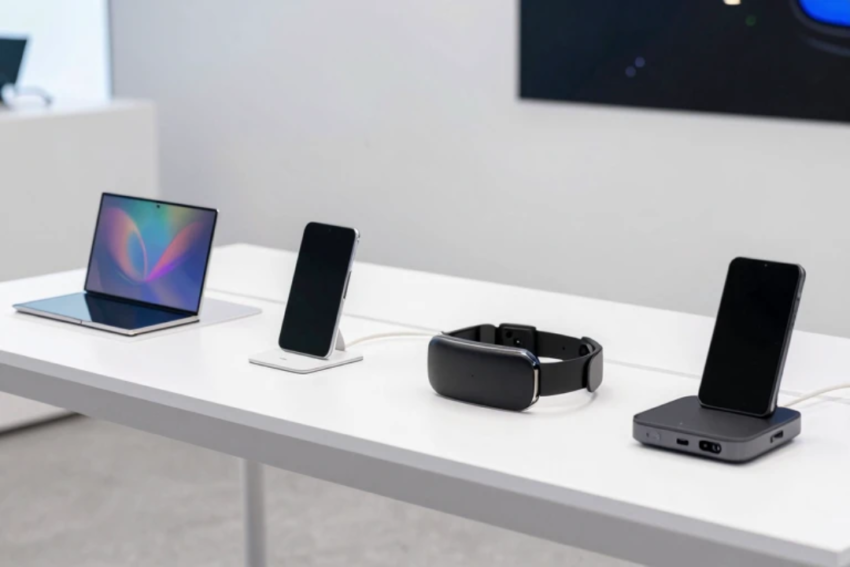
- Wearable technology
- Ambient computing
Instead of carrying a single smart device, people may use multiple connected technologies working together.
1. Smart Glasses and Augmented Reality Devices
Smart glasses are among the most promising technologies that could change how people access digital information.
Unlike smartphones, which require users to look down at a screen, smart glasses display information directly in the user’s field of vision.
Future smart glasses may provide:
- Navigation directions
- Real-time translations
- Notifications
- Video communication
- Workplace instructions
- Educational content
For example, a person walking through a new city could see directions displayed directly through their glasses without checking a phone.
In professional environments, smart glasses could help engineers, doctors, and technicians by displaying important information while they work.
As AR technology improves, smart glasses may become one of the most important replacements for traditional digital screens.
2. AI Personal Assistants and AI Devices
Artificial intelligence is becoming the foundation of future technology devices. AI-powered systems are moving beyond simple voice commands and becoming intelligent assistants capable of understanding context and user preferences.
Future AI devices may help users with:
- Managing schedules
- Organizing information
- Planning activities
- Controlling smart homes
- Providing recommendations
- Creating digital content
Instead of opening multiple applications, users may simply communicate with an AI assistant that completes tasks automatically.
AI devices will become more personalized by learning from user habits and adapting to individual needs.
The future assistant may not just answer questions—it may actively help users make decisions and improve productivity.
3. Smart Wearables Beyond Watches
Wearable technology is expanding beyond traditional smartwatches and fitness trackers. Future wearable devices will become smaller, more powerful, and more integrated into daily life.
Emerging wearable devices include:
- Smart rings
- Smart clothing
- Health-monitoring patches
- Intelligent glasses
- Wearable sensors
These devices may continuously monitor health information and provide real-time feedback.
Future wearables could track:
- Blood pressure
- Blood sugar levels
- Stress patterns
- Sleep quality
- Physical performance
This technology could transform healthcare by allowing early detection of health issues and supporting personalized treatment.
4. AI-Powered Personal Robots
Robots are becoming increasingly intelligent and moving from factories into homes and workplaces.
Future personal robots may assist with:
- Household tasks
- Elderly care
- Education
- Security
- Personal assistance
Unlike traditional machines, AI-powered robots can understand their surroundings and communicate naturally with humans.
Home robots may eventually help prepare meals, manage household activities, provide companionship, and assist people with limited mobility.
As artificial intelligence and robotics continue to improve, personal robots may become common household devices.
5. Brain-Computer Interface Devices
Brain-computer interfaces (BCIs) represent one of the most futuristic areas of technology. These devices aim to create direct communication between the human brain and computers.
Potential applications include:
- Controlling devices through thoughts
- Supporting medical treatments
- Improving accessibility
- Enhancing human-computer interaction
For people with physical disabilities, brain-controlled devices could provide new ways to communicate and interact with technology.
Although the technology is still developing, brain-computer interfaces could completely change the relationship between humans and machines in the future.
6. Smart Clothing and Electronic Fabrics
Clothing is becoming more than a simple material for protection and fashion. Smart fabrics are introducing technology directly into what people wear.
Smart clothing may include:
- Health monitoring sensors
- Temperature adjustment systems
- Fitness tracking features
- Communication technology
Athletes could use smart clothing to analyze performance, while healthcare providers could use it to monitor patients remotely.
Electronic fabrics represent a future where technology becomes part of everyday objects rather than separate devices.
7. Foldable, Flexible, and Invisible Displays
Traditional screens may change dramatically in the future. Flexible display technology is creating new possibilities for how people interact with digital information.
Future display devices may include:
- Foldable screens
- Rollable displays
- Transparent displays
- Wearable screens
These technologies could allow digital information to appear anywhere, from clothing and glasses to household surfaces.
The future may move away from fixed screens toward flexible and adaptable displays.
8. Smart Home Robots and Automated Living Systems
Homes of the future will become increasingly intelligent through connected devices and automation.
Future smart home systems may include:
- AI-controlled appliances
- Robotic assistants
- Automated cleaning systems
- Intelligent security devices
A smart home could automatically adjust lighting, temperature, entertainment, and security based on user preferences.
AI will allow homes to learn daily routines and provide assistance without requiring constant commands.
The result will be living environments that are more comfortable, efficient, and personalized.
9. Autonomous Vehicles and Smart Transportation Devices
Transportation technology is undergoing major changes through artificial intelligence and connectivity.
Future transportation devices may include:
- Self-driving cars
- Autonomous delivery robots
- Smart public transportation systems
- Connected vehicles
Autonomous vehicles use sensors, cameras, and AI to understand their surroundings and make driving decisions.
These technologies could improve road safety, reduce traffic congestion, and create more efficient transportation networks.
Transportation will become another area where intelligent devices work together to improve human mobility.
10. Advanced Health Technology Devices
Healthcare technology is one of the areas where future devices will have the greatest impact.
Emerging medical devices include:
- Smart diagnostic tools
- Wearable health monitors
- AI-assisted medical equipment
- Remote healthcare systems
These devices will allow people to monitor health conditions continuously and receive personalized medical recommendations.
Future healthcare may become more preventive, focusing on detecting problems before they become serious.
The Importance of Artificial Intelligence in Future Devices
Artificial intelligence connects many emerging technologies together. Without AI, smart devices would have limited ability to understand users and make decisions.
AI enables devices to:
- Learn from experience
- Recognize patterns
- Predict user needs
- Automate tasks
- Improve performance
As AI becomes more advanced, devices will become more intelligent and useful.
Challenges of Future Technology Devices
Although emerging devices offer exciting possibilities, they also create important challenges.
Privacy Protection
Future devices will collect large amounts of personal information. Protecting this data will be essential.
Cybersecurity
Connected devices may become targets for hackers, requiring stronger security systems.
Cost and Accessibility
Advanced technologies may initially be expensive, limiting access for some users.
Ethical Issues
AI-powered devices must be designed responsibly to ensure safety, fairness, and user control.
Human Dependence
As technology becomes more powerful, society must maintain a healthy balance between digital tools and human interaction.
A More Connected Future
The future of technology will be based on connected ecosystems rather than individual devices. Smartphones, wearables, AI systems, homes, vehicles, and public infrastructure will communicate with each other to create seamless experiences.
Imagine a future where:
- Your AI assistant manages your schedule automatically
- Your glasses provide real-time information
- Your clothing monitors your health
- Your home adjusts itself to your preferences
- Your vehicle drives safely without constant control
This future is becoming possible through continuous innovation.
Conclusion
The future of technology is moving beyond smartphones toward a world filled with intelligent, connected, and personalized devices. Smart glasses, AI assistants, advanced wearables, personal robots, brain-computer interfaces, and smart environments are creating a new generation of technology.
These devices will change how people communicate, work, travel, and manage their health. However, responsible development will be necessary to address privacy, security, and accessibility challenges.
The next technological revolution will not simply be about creating better gadgets. It will be about building a world where technology understands human needs and works naturally alongside people to improve everyday life.