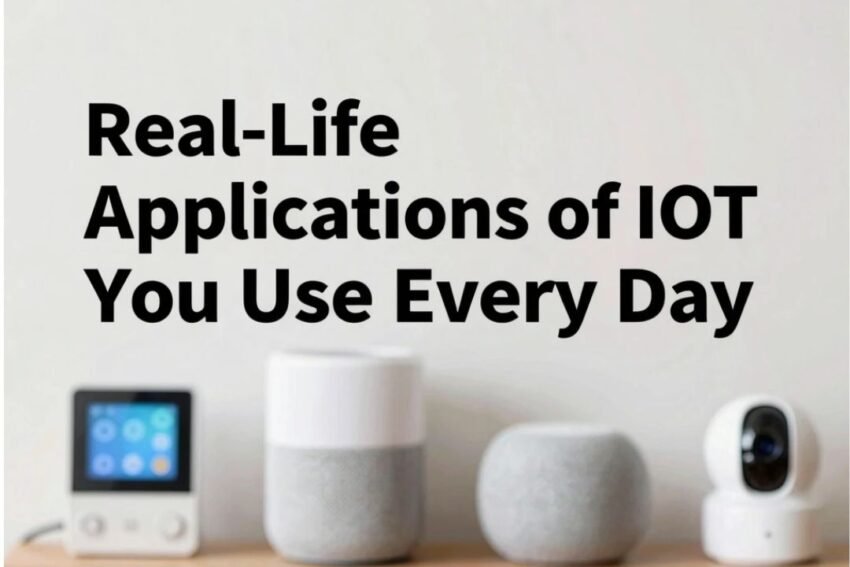
The Internet of Things (IoT) is no longer just a futuristic concept—it’s already woven into the fabric of our daily lives. From the moment you wake up to the time you go to bed, IoT devices are quietly working behind the scenes to make your life more convenient, efficient, and connected.
This article explores real-life IoT applications that you might already be using without even realizing it, showing how this technology impacts everyday activities at home, work, and beyond.
1. Smart Home Devices
One of the most visible examples of IoT is in smart homes. Devices connected to the internet allow homeowners to control their environment, save energy, and increase security.
- Smart Thermostats: Automatically adjust heating and cooling based on your routine and weather patterns, reducing energy bills.
- Smart Lights: Can be controlled via apps or voice commands, adjusting brightness, color, or schedule automatically.
- Smart Appliances: Refrigerators, ovens, washing machines, and coffee makers can be controlled remotely and even send alerts when maintenance is needed.
- Voice Assistants: Devices like Amazon Alexa, Google Assistant, and Apple Siri act as centralized hubs for controlling your home, playing music, checking the weather, and managing daily tasks.
By connecting these devices, IoT makes homes more comfortable, secure, and energy-efficient.
2. Wearables and Health Monitoring
IoT has revolutionized personal health and fitness through wearable devices that collect and analyze real-time data.
- Fitness Trackers and Smartwatches: Monitor heart rate, steps, sleep patterns, and even blood oxygen levels.
- Smart Health Devices: Devices like connected scales, thermometers, and blood pressure monitors track vital statistics and can share data with healthcare providers for remote monitoring.
- Medication Reminders: Some smart pillboxes notify you when it’s time to take medication, reducing human error.
These IoT applications empower users to monitor their health, stay active, and even prevent serious medical issues by providing timely insights.
3. Connected Vehicles
Modern cars are increasingly IoT-enabled, enhancing safety, navigation, and efficiency.
- GPS Navigation and Traffic Alerts: Connected vehicles can provide real-time traffic updates and suggest faster routes.
- Vehicle Diagnostics: IoT sensors monitor engine performance and notify drivers when maintenance is required.
- Infotainment Systems: Smart cars integrate with your phone to provide music, calls, and other services on the go.
- Autonomous and Semi-Autonomous Features: Advanced driver-assistance systems (ADAS) use IoT technology to detect obstacles, maintain lane position, and even park automatically.
IoT is gradually transforming driving into a safer and more connected experience.
4. Retail and Shopping Experiences
IoT has reshaped the way consumers shop, creating more personalized and efficient experiences.
- Smart Checkout Systems: Stores use sensors and cameras to automate billing and reduce wait times.
- Inventory Management: IoT devices track stock levels in real time, ensuring popular products are always available.
- Personalized Recommendations: Connected devices analyze shopping habits to suggest relevant products.
These applications make shopping faster, smarter, and tailored to individual preferences.
5. Smart Cities and Public Infrastructure
IoT is not limited to homes or personal devices—it’s also transforming urban life.
- Traffic Management: Sensors and cameras monitor congestion and adjust traffic lights for smoother flow.
- Waste Management: Smart bins alert collection services when they are full, improving efficiency.
- Public Safety: Surveillance cameras, connected emergency systems, and environmental sensors enhance city safety.
- Energy Efficiency: Streetlights equipped with IoT sensors reduce energy consumption by adjusting brightness based on activity levels.
IoT contributes to urban planning, efficiency, and sustainability, improving life for millions of city dwellers.
6. Agriculture and Food Production
Even in agriculture, IoT devices are improving efficiency, crop yield, and sustainability.
- Soil and Crop Monitoring: Sensors detect moisture, temperature, and nutrient levels to optimize irrigation and fertilization.
- Livestock Tracking: Wearables monitor animal health and location.
- Smart Greenhouses: Connected devices control temperature, humidity, and light, ensuring optimal growing conditions.
IoT helps farmers make informed decisions, reduce resource waste, and increase productivity.
7. Industrial Applications You Encounter Indirectly
Even if you’re not directly working in a factory, IIoT applications affect products and services you use daily.
- Efficient Supply Chains: IoT sensors track shipments, ensuring products reach stores on time.
- Quality Control: Connected machinery ensures products are made consistently and safely.
- Predictive Maintenance: Factories detect equipment failures before they happen, reducing the risk of supply disruptions.
Industrial IoT plays a silent but crucial role in the reliability of the goods and services we depend on every day.
8. Energy Management at Home and Beyond
IoT helps monitor and manage energy use, promoting efficiency and sustainability.
- Smart Meters: Track electricity, water, and gas usage in real time.
- Connected Solar Panels: Monitor energy production and optimize consumption.
- Home Energy Management Systems: Automate appliances to reduce unnecessary energy use, lowering bills and environmental impact.
Energy IoT applications help both individuals and communities save money while supporting sustainability.
Conclusion
The Internet of Things has quietly integrated into almost every aspect of modern life. From smart homes and wearable health devices to connected cars, urban infrastructure, and agriculture, IoT devices make daily life more convenient, efficient, and safe.
Even if you don’t realize it, you likely interact with IoT every day—checking a fitness tracker, adjusting a smart thermostat, or navigating traffic with real-time GPS. As technology continues to evolve, IoT will become even more pervasive, making the world more connected and intelligent than ever before.