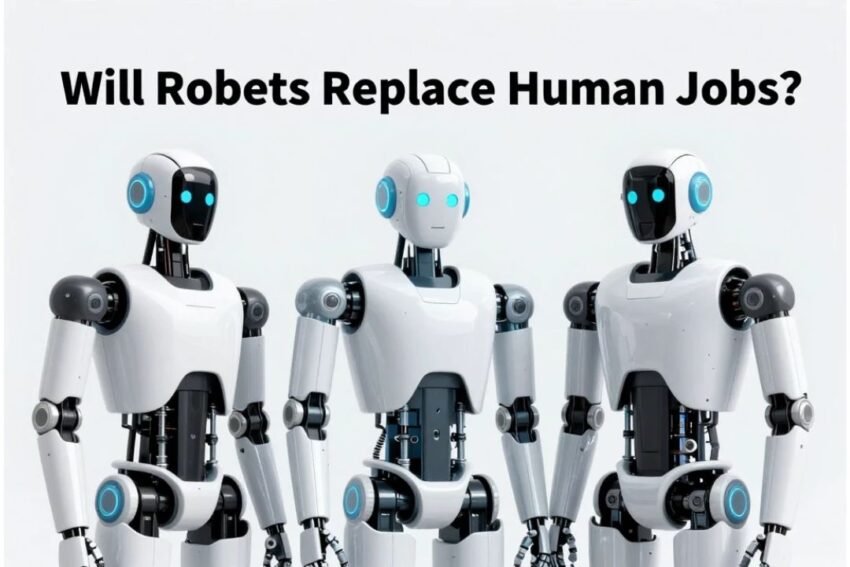
Humanoid robots—machines designed to resemble and mimic human behavior—have captured the imagination of scientists, businesses, and the public for decades. With rapid advancements in artificial intelligence (AI), robotics, and machine learning, these robots are becoming increasingly capable of performing tasks that were once the exclusive domain of humans.
In 2026, humanoid robots are no longer science fiction—they are a tangible presence in industries ranging from manufacturing to healthcare, customer service, and education. This has sparked a crucial question: Will humanoid robots replace human jobs?
This article explores the rise of humanoid robots, their applications, the impact on the workforce, and how humans can adapt to coexist with these intelligent machines.
Introduction: The Rise of Humanoid Robots
Humanoid robots are designed to resemble humans in form and function. They often have:
- Arms and legs for mobility
- Facial expressions for communication
- Voice interaction capabilities
- AI systems for decision-making and learning
Examples of Humanoid Robots in 2026:
- Atlas by Boston Dynamics – Agile robots performing physical tasks
- Ameca by Engineered Arts – Social humanoid robots for interaction
- Tesla Optimus – General-purpose humanoid robot for work and industry
Humanoid robots are being used in sectors where human-like interaction and adaptability are crucial.
Key Applications of Humanoid Robots
1. Manufacturing and Assembly
Humanoid robots are increasingly used in factories for:
- Assembly line work
- Quality control inspections
- Handling heavy or repetitive tasks
Their human-like dexterity allows them to perform tasks that traditional robots struggle with.
2. Healthcare and Assistance
In healthcare, humanoid robots are:
- Assisting nurses and doctors
- Helping patients with mobility and rehabilitation
- Providing companionship to the elderly or isolated
This reduces workload on human staff and improves patient care.
3. Customer Service
Retail, hospitality, and service industries are adopting humanoid robots for:
- Greeting and assisting customers
- Providing information and directions
- Managing check-ins and bookings
These robots offer consistency and 24/7 availability.
4. Education and Training
Humanoid robots can act as teaching assistants:
- Providing interactive learning experiences
- Tutoring students in subjects like coding, language, or STEM
- Demonstrating experiments and practical tasks
They enhance learning efficiency while freeing educators for higher-level tasks.
5. Hazardous or High-Risk Work
Humanoid robots are deployed in environments unsafe for humans:
- Nuclear power plants
- Disaster zones
- Mining and construction sites
They reduce human exposure to danger while completing complex tasks.
Will Humanoid Robots Replace Human Jobs?
The fear that robots will fully replace humans is widespread. The reality, however, is nuanced.
Areas Where Robots May Replace Jobs:
- Repetitive, predictable tasks (e.g., assembly line work, data entry)
- Manual labor in hazardous environments (e.g., mining, firefighting)
- Basic customer interaction roles (e.g., information desks, simple queries)
Areas Where Humans Remain Essential:
- Creative work (e.g., art, design, strategy)
- Complex problem-solving (e.g., consulting, advanced engineering)
- Emotional intelligence tasks (e.g., therapy, negotiation, leadership)
Humanoid robots excel in automation and consistency, but humans are still superior in creativity, empathy, and complex judgment.
Benefits of Humanoid Robots in the Workforce
- Increased Efficiency: Robots can work continuously without fatigue.
- Reduced Human Risk: Robots handle dangerous tasks.
- Consistency and Accuracy: Robots perform repetitive tasks without errors.
- Support for Humans: Robots can augment human capabilities rather than replace them.
- Cost Reduction: Long-term savings in labor-intensive industries.
Challenges of Humanoid Robots
1. High Costs
Developing and deploying humanoid robots can be expensive.
2. Technical Limitations
Robots struggle with:
- Complex decision-making in unpredictable environments
- Fine motor tasks beyond current AI capabilities
- Understanding nuanced human emotions
3. Workforce Displacement
Jobs involving repetitive or routine tasks are at risk, requiring reskilling programs.
4. Ethical Concerns
The rise of humanoid robots raises questions about:
- Privacy
- Decision-making accountability
- Human-robot interaction boundaries
How Humans Can Adapt
1. Focus on Skills Robots Can’t Replace
- Creativity
- Critical thinking
- Leadership and interpersonal skills
2. Embrace Human-Robot Collaboration
Learn to work alongside robots to improve productivity.
3. Reskilling and Upskilling
- Training programs for AI management, robotics maintenance, and advanced technology
- Emphasis on high-value, human-centered skills
4. Leverage AI for Augmentation
Humanoid robots should be seen as assistants, not competitors.
The Future of Humanoid Robots in the Workplace
By 2030, humanoid robots are expected to:
- Handle more complex tasks with AI-driven adaptability
- Integrate seamlessly with human teams
- Provide services in healthcare, retail, logistics, and education
- Augment, rather than replace, human creativity and empathy
The future is less about replacement and more about collaboration.
Real-World Examples
- Tesla Optimus: Assists in repetitive industrial tasks to reduce human workload.
- Ameca: Interacts with people in exhibitions and customer-facing roles.
- Robear (Japan): Helps lift patients in elderly care facilities.
These examples show that humanoid robots complement human labor while enhancing productivity.
Conclusion
Humanoid robots are transforming industries and the way we work. While some jobs may be automated, humans are not likely to be fully replaced. The most successful future workplaces will combine human creativity, emotional intelligence, and critical thinking with robotic precision, endurance, and efficiency.
Humanoid robots are tools that can empower humans, not eliminate them. By learning to work with these intelligent machines, society can achieve higher productivity, better safety, and a more innovative workforce.
Final Thoughts
The question is not “Will robots replace human jobs?” but “How can humans and robots work together for a smarter, more efficient world?”
The rise of humanoid robots is an opportunity—one that challenges humans to adapt, innovate, and redefine their roles in an AI-powered workplace.
In 2026, the message is clear: humans and robots will share the future of work, each complementing the other’s strengths.